
How do we really see things as they are?
When is something truly “right,” and when do we just think it is?
In this conversation, the Buddha and his disciples explore what it means to have Right View.
Using everyday examples—like reaching for an object or following our desires—they show how understanding arises when we observe without clinging or forcing conclusions.
It’s an invitation to see the world more clearly, with a calm and open mind.
What Is “Right View”?
What does our teacher mean by “Right View”?
Does the term mean “looking correctly”?
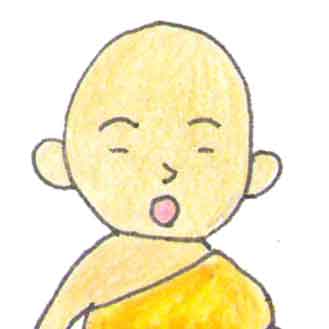
Maybe it could also mean “seeing rightly.”
You can think of “View” as meaning either “seeing” or “looking.”
Now, let’s think about the word “right.”
We also have “correct,” which is similar, but the nuance is different.
“Right” is “Right.” It’s not the same as “Correct.”
Ah, I see… But then, what does “correct” even mean?
How do we know something is correct?
What do you mean?
We often ask our teacher questions, don’t we?
When someone has a question, we stick close, listen carefully, and ask our own questions too.
Yes.
Our teacher always answers, and we learn a lot.
So I think it is right to ask honestly about what we do not understand.
I agree.
But some people might say that asking questions burdens the teacher.
They may think it’s more correct to hold back.
Yes, some may think that way.
There are times when the teacher is busy, or when they don’t have much free time.
In those cases, holding back might indeed be the right thing to do…
But even so, I don’t think it’s always right to never ask at all…
So, is it right to ask, or right not to ask?
And what does “correct” really mean in this context?
Even if we say “right,” it’s hard to know exactly what that really means…
I see… Then, Teacher, may I ask one more thing?
How should we actually practice Right View?
People Tend to Lean Toward “What Is” and “What Is Not”
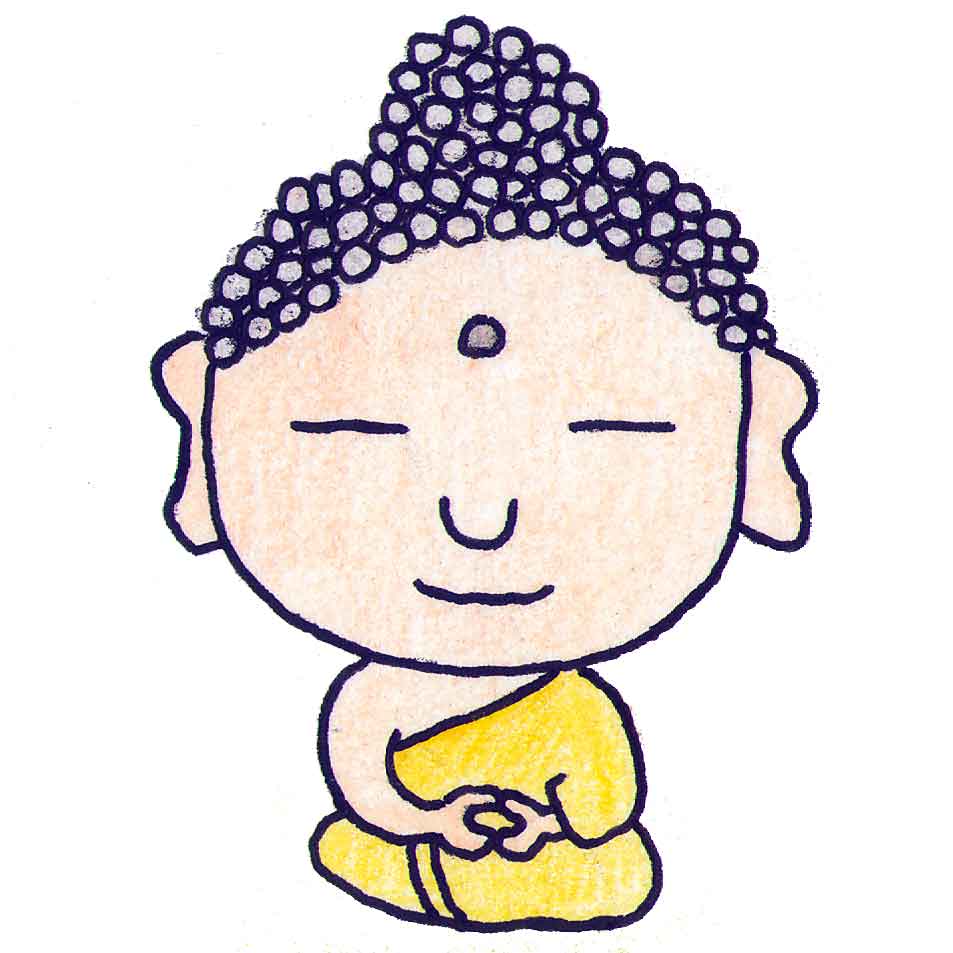
In this world, people tend to lean toward two states. For example, what is and what is not.
Lean toward what is?
Or lean toward what is not?
Do you mean that people naturally divide their thinking into these two ways?
Ah, I see. So you are using “what is” and “what is not” as an example.
Let’s think about this more concretely. Imagine trying to get something—grasp it, make it yours.
The Question of “In Hand or Not”
When I want something, I reach out, touch it, grasp it, and make it mine.
At that moment, is it in your hand or not?
That’s what catches everyone’s attention, don’t you think?
Whether it’s in your hand or not, whether it’s become yours or not, that’s what everyone focuses on.
This isn’t just about physical things—we can think of knowledge or ideas in the same way.
Yes. If we think about knowledge, choices, or decisions, it might be easier to see it as making choices about what to keep and what to let go.
We reach for it, try to grasp it, and then it becomes ours.
If it’s in our hand, it’s ours. If not, we don’t get it.
We get caught up trying to grasp things and calculating how to make them ours.
But that’s exactly when we should observe ourselves carefully and reflect calmly.
When we try to grasp something, our hands tighten.When we scheme to make it ours, the mind grows tense.Both body and mind end up straining, don’t they?
It’s already there, isn’t it?
So why does it feel like what really matters is whether it’s in our hand or not?
I see.That’s one way to think about it.
If it is not in our hand, we might feel as if it does not exist, even if it exists outside our hand.
That kind of flexibility requires a certain inner space.
When we’re busy plotting how to obtain something—when we’re all tensed up—we wouldn’t even think of it for a moment.
It’s already there, and yet we keep struggling over whether it’s in our hand or not.
That’s painful, isn’t it?
Still, desire is part of life.
As long as we’re human, it won’t simply disappear.
Desire itself is natural—it is part of being human.
But when we get carried away by it, there is suffering.
We notice this more easily when we have some inner space to observe carefully.
Everything Arises When It Arises; Everything Ceases When It Ceases
Everything arises when it arises; everything ceases when it ceases.
Suffering arises and ceases.
Desire arises and ceases.
Ah, so even what we call “being”—all that exists, whether in our grasp or not—is always changing.
It arises when it arises and ceases when it ceases, like the sun rising and setting.
Everything we desire—everything we seek—is constantly changing.
Even if something exists right now, it will one day cease to exist—what is “being” now will become “non-being” in time.From this conversation, many things already come into view.
Seeing and understanding naturally, as in this conversation, without doubt or being misled by preconceived notions or assumptions.
This is what I call Right View.
So, is Right View about not seeing things as either “in our hands” or “not in our hands”?
You could say Right View is kind of about seeing things flexibly, without tension in body or mind.
I don’t think we can say one of these is “the answer.” Everything in the discussion is connected.
So… there really isn’t an answer?
But the Buddha did give us his answer, didn’t he?
Yes, the Buddha gave his words as an answer, but the words themselves are not the answer.The words don’t contain a fixed answer, yet through them, an understanding does arise.
Hmm… Is this also a warning against clinging too much to ideas like “being” or “non-being”?
Exactly. For example, what is “being” here and now will one day become “non-being.”If we conclude that it must be one or the other, we may fail to see things as they truly are.
A Way of Seeing That Leans Neither to Being nor Non-Being
One who clings to “being” does not see cessation.
One who clings to “non-being” does not see arising.
Let’s consider something familiar—an object right in front of you. A computer, a pencil, a notebook—anything.
If we conclude from the start that it “exists,” what happens?
Well… it clearly “exists” right here, doesn’t it?
But it will eventually break. It will one day “cease to exist,” right?
Exactly. Things change—they cease to remain in their current form.
But for someone who decides from the start that it “exists,” the fact that it will “cease to exist” is hidden from view.
Now, what if we conclude from the start that something “does not exist”?
But… it does exist here, doesn’t it?
If it will eventually “cease to exist,” I might be tempted to think it’s all “non-being.”
Even though it appears to exist, this way of thinking makes it hard to notice that it actually exists.
When you say “all non-being,” are you denying the fact that it exists right now, in this moment?
Yes. It arises in its current form, amid all the changes of various things.
But for someone who decides it “does not exist,” the fact that it does exist is hidden from view.
If we conclude it “exists,” we fail to see that it does not exist.
If we conclude it “does not exist,” we fail to see that it does exist.
Both “being” and “non-being” are aspects of reality.
If either aspect becomes invisible, we cannot say we are seeing correctly.
So… the two tendencies the Buddha mentioned earlier—does that mean we often get pulled toward one side or the other, like “being” or “non-being”?
The two supports are not limited to “being” and “non-being.” I only used them as examples.
Whenever we cling to a conclusion, we tend to lean toward it.
That’s how prejudice is born—by leaning too strongly?
Yes. And if we strain too hard to understand, we may only tighten our confusion further.
Related Articles
calculating — refers to consciously planning or strategizing. See the article The Sickness of Being Calculating for more:
日本語版はこちら↓
コメント