
As Sona continued his practice, he gradually began to sort out his own doubts. Earlier, he had listened to the Buddha’s metaphor of the veena and reflected on his own path as if it were music—a realization that left a deep impression.
With that day etched in his heart, he now went to report to his teacher, the Buddha, the insights and sensations he had gained.
“Neither too tight, nor too loose—there is a sound that gradually emerges in daily practice,” he quietly affirmed in his heart, with a quiet resolve, as he went to share his insights with the Buddha.
Reflecting on the Unity of Practice and Awakening
Everyone, I have something I would like to share with you.
What is it?
It is about the time when I wanted to stop my practice… when I even thought about leaving as a disciple.
Ah, I remember that (laughs).
Back then, I received so much help from you.
Not at all.
We also learned a lot from your experience.
So, what is it that you want to share today?
To put it simply, I have finally understood what your teaching meant at that time.
What!?
Does that mean you’ve attained awakening?
No, it is not about having attained awakening or not.
Even if one hasn’t attained awakening, simply continuing along the path of practice can itself be seen as a kind of awakening… or at least, that’s one way to look at it.
I don’t understand.
I still have so much to learn.
I am walking the path of learning.
So, you haven’t attained awakening?
That means you haven’t reached a state where all desires and anger are gone?
Well, yes… that is true.
It’s okay. Speak freely.
I have not yet exhausted my desires, nor attained awakening.
But if someone continues on the path of practice, with a sincere wish to understand, then the very act of practice is already an accomplishment.
I have realized that walking the path of learning—walking the path of practice—is already a meaningful achievement in itself.
Reflecting on the Veena Metaphor: Neither Too Tight Nor Too Loose
Hmm… I don’t really understand.
Could you explain it step by step?
Yes.
Perhaps it relates to the time you wanted to quit and the veena metaphor you shared before?
Indeed, that veena metaphor was a significant moment for me.
If someone asked me about my memories with the Buddha, I would surely tell that story.
I’m sure such memories will be remembered for generations.
At that time, I wanted to quit my practice.
You were always diligent, Sona, and you had been pushing yourself too hard. You were physically and mentally exhausted.
Yes. I followed the teacher’s instructions every day.
It may sound like I was diligently practicing, but in truth, I was simply following the instructions day by day.
Your every action seemed perfectly aligned with the teacher and the group.
I really thought, “Wow, they are amazing, working so hard.”
So until I said I wanted to quit, that’s how I appeared to everyone.
I did indeed try my best. I was desperate.
Yet, no matter how hard I worked, no matter how earnestly I followed instructions, I could not attain awakening.
The lack of results made me anxious.
That anxiety eventually became almost obsessive:
- “I must try harder.”
- “If this isn’t enough, I must push myself even further.”
- “If even this fails, I must push myself beyond my limits…”
I see now that your efforts were coming from those feelings.
When I reached my limit, I simply gave up.
I could no longer continue.
I felt I couldn’t go on anymore.
If all that effort had turned into anxiety and obsessive thoughts, it’s no wonder it became overwhelming.
It was good that you reached that understanding, but I don’t think it was ever necessary to completely give up.
I think realizing one’s limits and taking a moment to reflect on oneself is a good thing.
Yet, even though I thought I had briefly reflected, I quickly lost sight of myself and chose to give up.
That’s why you wanted to quit practice and leave the disciples.
My tightly wound heart had already snapped.
“You are like a string pulled too tight, about to break,” the Buddha had told me.
Later, I realized that my efforts, my actions, my diligence had become like the tightly stretched strings of a veena.
At that time, even if we told you to ease your tension, the message didn’t get through.
We just told you to relax your hands, and instead, you went and tried to give up everything!
I was so drained that even trying to relax ended up making me tense.
All along, I had been pushing myself too hard.
Your hands were always so tight from all that tension.
When we just told you, “Try to relax your hands,” you ended up flinging your fists wide open instead.
Exactly.
So, whether I chose to push myself harder or to fully relax, it ultimately led me to give up entirely.
I had reached my limit in either case—either exhausted from effort or too relaxed to do anything at all.
It’s strange, isn’t it?
No matter whether you pushed yourself or tried to let go, both paths led to giving up.
That’s why the veena story was so valuable to me.
Just as one considers how to produce the “right sound” on a veena, I decided to think the same way about practice.
A string pulled too tight doesn’t make a good sound.
The tighter you pull, the less likely it produces a good tone.
If it’s too tight, no sound comes at all.
The harder you push in practice, the less effective it can become.
If the string is pulled too tight, the tension eventually takes its toll.
“It’s as if the veena produces no sound”—in the same way, practice can no longer function as practice.
And if the string is too loose, no good sound comes either.
The looser it is, the less effective it becomes.
If the string is too slack, it sags and loses tension.
“It’s as if the veena produces no sound”—in the same way, practice can no longer function as practice.
With that understanding, I could face my practice naturally.
So, you found your “right sound” in practice?
Yes. I found the “right sound” for myself.
And now, my practice continues naturally, allowing effort and relaxation, but without overheating or laziness.
Does finding the “right sound” mean you’ve attained awakening?
If you mean that I have noticed the “right sound,” that understanding wouldn’t be wrong.
So the “right sound” is awakening?
It would be wrong to put it that way.
The “Right Sound” Is Not One Fixed Point
What do you mean by that?
When you play the veena, how do you make a “good sound”?
Well… you find the right place.
Not too tight, not too loose.
You find the point that is just right.
Yes, that is true.
When you find that right point, a good sound comes out.
You could call that the right answer.
But…
Are you saying that’s enlightenment?
Because a “good sound” comes out, right?
No, it would be wrong to put it that way.
Even if a good sound comes out at that moment, it is only for that moment.
If you truly intend to play the veena, playing it is not a one-time event.
That’s true.
You don’t play the veena only once.
So instead of asking,
“How can I produce a good sound now?”
you find yourself naturally beginning to ask,
“Whenever I play, how can I produce a good sound each time?”
Each time, your physical condition is different.
The surroundings are different too.
So the right point is different every time.
And this is not limited to music or practice.
It applies to everything, doesn’t it?
Yes. Everything is changing.
Nothing remains exactly the same.
Then when you play the veena, each time, how do you produce a good sound?
Well, each time you play, you find that right place again—not too tight, not too loose.
For the veena, we call this tuning.
Each time you play, you adjust the instrument to the proper pitch.
Yes. Of course, it depends on the condition of the instrument, the temperature and humidity of the room, and even the group you are playing with.
In an orchestra, the pitch you match may differ.
Last time, the right point was here. (red line)
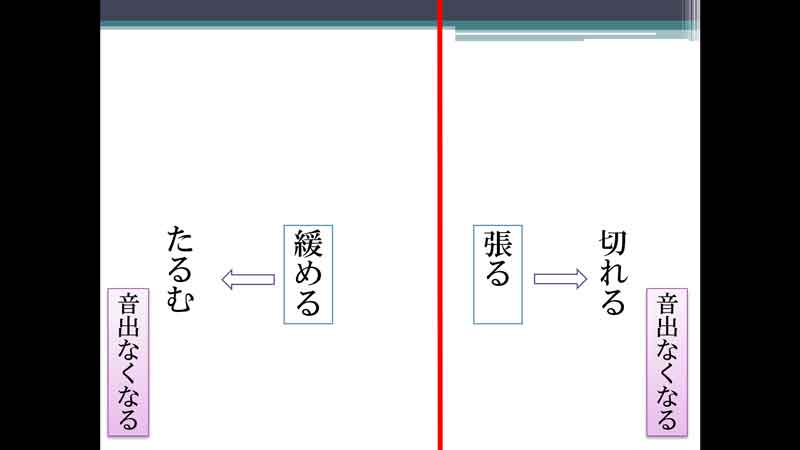
From left to right: No sound slack ← loosen tension → break no sound
But this time, the right point may be somewhere else. —here (red line).
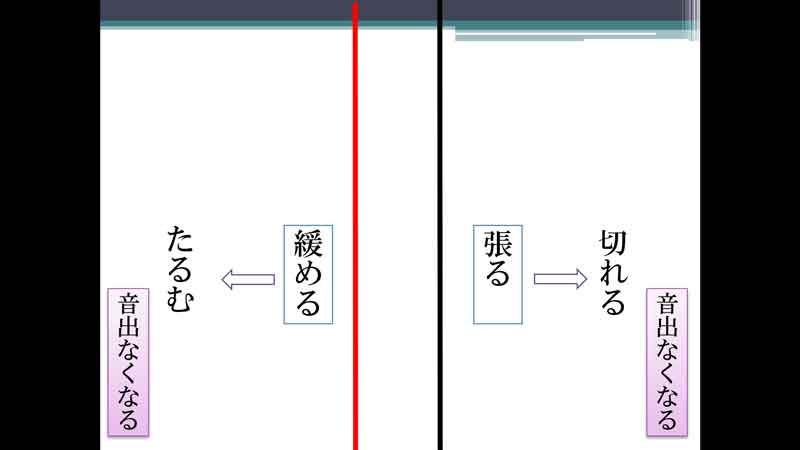
And since we are human, sometimes we make mistakes—like the string breaking.
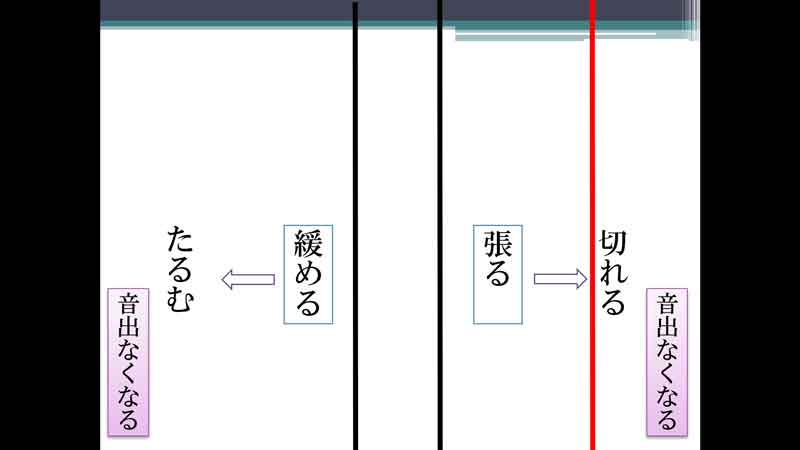
Of course. We cannot say there are never mistakes.
But when that happens, we adjust again right away.
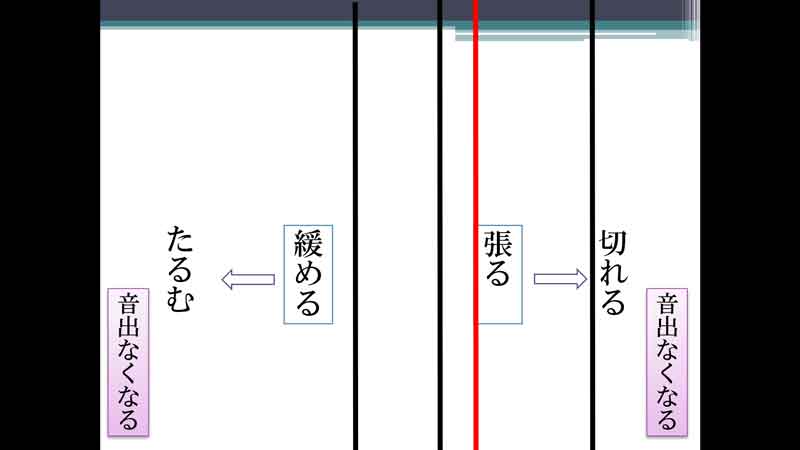
Each time, again and again, we tune.
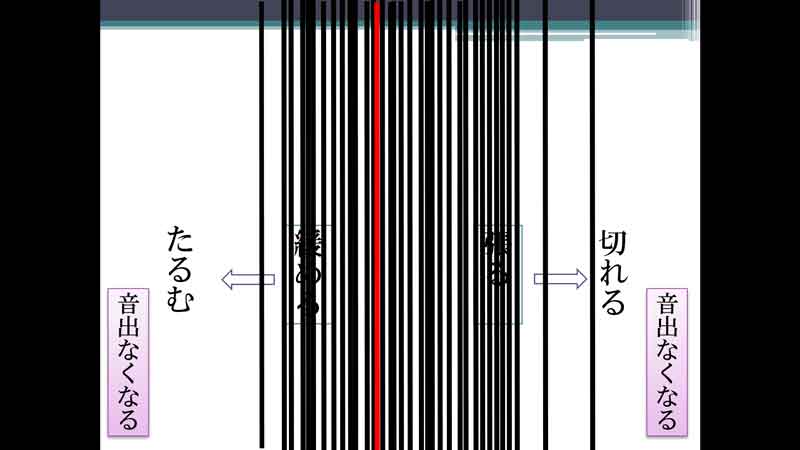
To “repeat” means to do the same thing many times, right?
Yes. After a while, you stop counting how many times you have done it.
But even though you repeat it, each time is never exactly the same.
We do the same thing again and again, and yet each time it is different.
Eventually, those small adjustments connect, and what once looked like many separate points no longer appears separate.
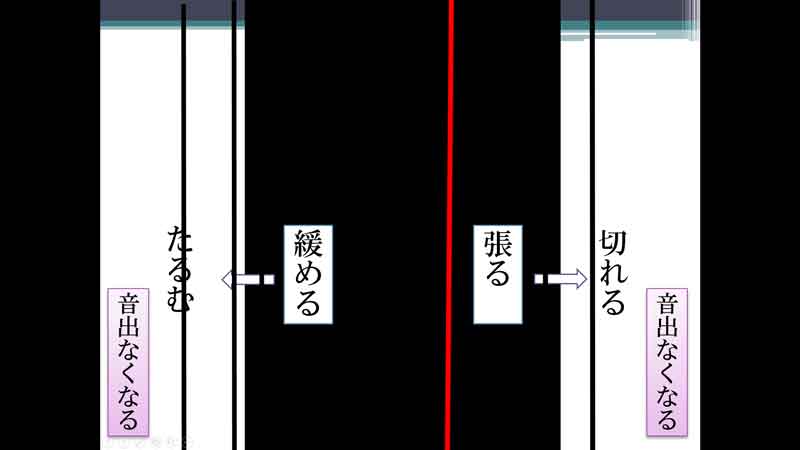
Think of it like drawing many lines, each slightly different.
Over time, they overlap and form a single thick line—a path.
This is how we learn—step by step.
Each step leaves a trace.
Those traces gradually become something like a path.
A path does not originally exist in nature.
People and animals walk through places that are easy to pass.
The grass is pressed down. The soil becomes firm.
Because it becomes easier to walk there, it is walked again.
Grass grows less easily. It becomes even easier to walk.
In this way, what we later call a “path” slowly forms.
Each step is not only our own.
Others have walked there too.
People from the past have walked there.
In terms of practice, the Buddha walked there.
Other disciples who learned from him walked there as well.
That is why it is called the Buddha’s Way.
Come to think of it, the Buddha did not create the path.
He said he discovered an ancient path that had already been walked by those before him, didn’t he?
Yes. I have indeed spoken of such a thing before (a similar story appears in another sutra).
Practice and Awakening Are One (修証一如Shusho-Ichinyo)
That path shows us where to walk and which direction to take.
If there’s a path, we know where to walk; if not, we’re lost.
Thus, each step (practice) is itself the path, and the path shows the direction (awakening).
Walking the path of learning (practice) is itself the fulfillment (awakening).
I see. But how do you actually give a good performance?
Huh?
When you take practice seriously, you naturally start thinking about it.
Just talking won’t make it clear.
A good sound alone doesn’t make a good performance, and mindless practice won’t either.
But when you take practice seriously, this clarity naturally appears.
日本語版はこちら↓
コメント