
Based on Zāḥāgama Sutra, Volume 12-288.
Is there a clear cause for aging and death?
Is it caused by ourselves, or by something else?
Perhaps the very question already narrows the possible answers.
What is the cause of aging and death? — The disciples’ question
Hello, Śāriputra.
I have a question I would like to ask you, if that is alright.
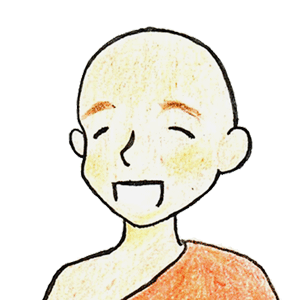
Hello. Certainly.
If it is something I can answer, I will, of course.
There is “aging,” isn’t there?
I have long passed the age when one is first called an adult.
With each passing year, I notice changes in my body: my teeth chip, and injuries take longer to heal.
Surely, as we age further, we gradually lose abilities we once had. This is what we call “aging.”
And then there is “death,” correct?
Yes, indeed, there is.
Our question is this: What is it that causes aging and death? What is the cause?
Are Aging and Death Caused by Oneself or by Others?
Are “aging” and “death” caused by oneself?
It cannot be said that they are caused by oneself.
Then, are they caused by something other than oneself?
It cannot be said that they are caused by something else.
Then, is it that both oneself and something else together are the cause?
It cannot be said that both oneself and something else together are the cause.
If it is neither oneself nor something else, does that mean there is no cause at all?
It cannot be said that there is no cause if it is neither oneself nor something else.
Well, to add a point, aging and death arise because there is life.
Death exists because there is life. It occurs because birth occurs.
“Life” and “death” can never be considered separately, can they?
There is parting because there is meeting. If there were no meeting, there would be no parting. Therefore, for every reality of parting, there must be a meeting.
I understand that life and death cannot exist independently of each other.
Then perhaps we should change the question.
What causes life? What is its origin…?
What Is the Cause of Life and This Body?
I would like to ask a slightly different question.
For example, this life exists because of this very self—this body of mine.
This body… so you mean what is ordinarily understood as the “self,” right?
Yes, exactly. I think it might be easier to focus on the body for now.
Is this “life” or “self” something that arises from oneself? That is, is it something that depends entirely on oneself?
It cannot be said that life or the self arises from oneself alone.
The self is oneself, isn’t it?
It cannot be said that the self arises from oneself alone…
Ah, I see—because we eat food, of course.
Yes, that’s right. The body is supported by other things. Then could it be that life and the self arise from other things?
It cannot be said that life and the self arise from other things alone.
Then could it not be said that both oneself and others together bring them about?
It cannot be said that life and the self arise from both oneself and others together.
Why not!?
Do you mean to say that they arise from something other than oneself and others, perhaps something special, something absolute?
It cannot be said that life and the self arise from something other than oneself and others, something special, or something absolute.
Nor can it be said that there is no cause at all for life and the self.
It is neither oneself, nor others, nor both, nor something else, nor nothing at all.
If it is none of these, then what is it? What is correct?
Yes, indeed. What does it mean? I do not understand.
A Metaphor of the Tripod — Interdependent Existence
For example, do you know what a tripod is?
Huh? A tripod?
You mean the stand for a camera or something like that?
Yes, something like this.
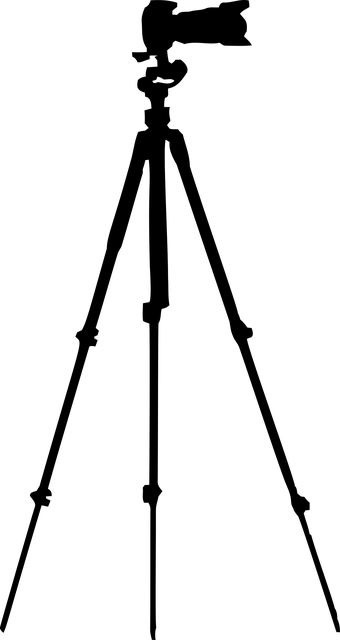
Exactly, that’s it!
Now, think about how this tripod stands.
It stands on three legs, of course.
Yes, the three legs spread out, and the tripod balances on those three points.
Each of the three legs supports the others as it stands.
If one of the legs, or even two, were to disappear, what would happen?
It would fall down, right.
It cannot stand if even one leg is missing.
Exactly.
If any part is missing, it cannot remain standing.
It exists in mutual support, dependent on one another.
So, does this answer the question we discussed earlier?
Huh?
Ah…
Oh! I see.
What Happens When One Tries to Identify a Single Cause
So, regarding the previous question, there is no single correct answer?
Well, yes… but it’s not exactly that simple…
If you choose one, the others are negated.
The legs not chosen are effectively discarded, so to speak.
Exactly. That’s why no answer can be omitted.
Still, I cannot grasp the idea that it is not caused by both oneself and others.
For example, this body is called “oneself.” But it is not created by oneself alone. That, I understand.
And it is not created solely by others either. That, I understand as well.
So it must be brought about precisely because both oneself and others are involved.
It cannot be said that it is caused by oneself.
It cannot be said that it is caused by others.
Therefore, saying it is caused by both oneself and others—that is how we understand it, right?
It cannot be said that it is caused by both oneself and others.
There is a saying that oneself and others are “as one,” isn’t there?
Certainly, neither can be omitted. So why not say it is both oneself and others?
It cannot be said that it is caused by both oneself and others.
For example, the body is sustained by food, which is something external, right?
Yes, indeed. One consumes other things.
So the body is formed not just by oneself, but by others as well.
Now, suppose one eats whatever one wants, as much as one wants—indulging excessively, in other words.
Yes.
If one continues such overindulgence, naturally the body will be damaged, right?
Yes, of course. That would damage it.
If someone asked what caused that damaged body, what would you answer?
It would be oneself, for repeating overindulgence.
Exactly.
We wouldn’t say, “The body is formed by both oneself and what one eats—so it is both oneself’s fault and the fault of the food!”
Indeed…
Sure, technically the food contributes to the damaged body, but that’s not what we mean here, right?
Yes, that would completely change the meaning…
Good. I am very pleased with this discussion.
Thanks to your questions, we were able to have a wonderful conversation. Thank you.
No, thank you. It is I who am grateful.
Thank you very much.
日本語版はこちら↓
コメント